Step into any serious bakery or bustling professional kitchen, and you’re likely to encounter a legend: the Hobart stand mixer. For decades, this name has been synonymous with unparalleled durability, relentless power, and unwavering performance, setting the gold standard in the world of heavy-duty mixing equipment. While often seen as a workhorse for commercial environments, the Hobart stand mixer has also found its way into the kitchens of dedicated home bakers who demand nothing less than the absolute best. If you’re looking to elevate your baking experience with a machine built to outlast and outperform, understanding the true value of a Hobart stand mixer is your first step towards culinary mastery.
|
Our Picks for the Best Stand Mixer in 2026
As an Amazon Associate I earn from qualifying purchases.
|
||
| Num | Product | Action |
|---|---|---|
| 1 | KitchenAid Classic Series 4.5 Quart Tilt-Head Stand Mixer K45SS, White |

|
| 2 | Kitchen in the Box Stand Mixer, 3.5 QT Small Kitchen Electric Stand Mixers, 10-Speed Portable Lightweight Dough Mixer for Daily Use with Egg Whisk, Dough Hook, Beater (Lavender Purple) |
|
| 3 | KitchenAid Classic Series 4.5 Quart Tilt-Head Stand Mixer K45SS, Onyx Black |
|
| 4 | Kitchen in the box Stand Mixer,3.2Qt Small Electric Food Mixer,6 Speeds Portable Lightweight Kitchen Mixer for Daily Use with Egg Whisk,Dough Hook,Flat Beater (Blue) |
|
| 5 | 20Qt Commercial Food Mixer, 1250W Commercial Stand Mixer with 3 Speeds Adjustable, Heavy Duty Electric Dough Mixer with Stainless Steel Bowl, Dough Hooks &Whisk Beater, for Bakery Pizzeria |
|
| 6 | Stand Mixer, 6.5QT 10-Speed Tilt-Head Electric Stand Mixer, 3-In-1 Kitchen Mixer with Bowl, Dough Hook, Whisk and Beater, Food Mixer for Baking, Cake and Most Home Cooks, Black |
|
| 7 | KitchenAid Classic Series 4.5 Quart Tilt-Head Stand Mixer K45SS, Onyx Black |
|
| 8 | STBA Stand Mixer, 5QT+5.5QT Two Bowls Electric Kitchen Mixer, 10+P Speed Dough Mixer with Whisk, Beater & Dough Hook, Dishwasher Safe, Black |
|
| 9 | Hamilton Beach Classic Stand and Hand Mixer, 4 Quarts, 6 Speeds with QuickBurst, Bowl Rest, 290 Watts Peak Power, Red (64654) |
|
| 10 | KitchenAid Artisan Mini 3.5 Quart Tilt-Head Stand Mixer - KSM3316X - White |
|
The Enduring Legacy of Hobart Stand Mixers: A Story of Innovation
The journey of the Hobart stand mixer began over a century ago, rooted in American ingenuity and a desire to revolutionize the tedious task of hand-mixing. In 1897, Clarence Charles Hobart established the Hobart Electric Manufacturing Company in Troy, Ohio. The pivotal moment for stand mixers arrived in 1908 when Herbert Johnson, a brilliant Hobart engineer, observed a baker struggling with dough by hand. This observation sparked an idea: there had to be a better, mechanical way.
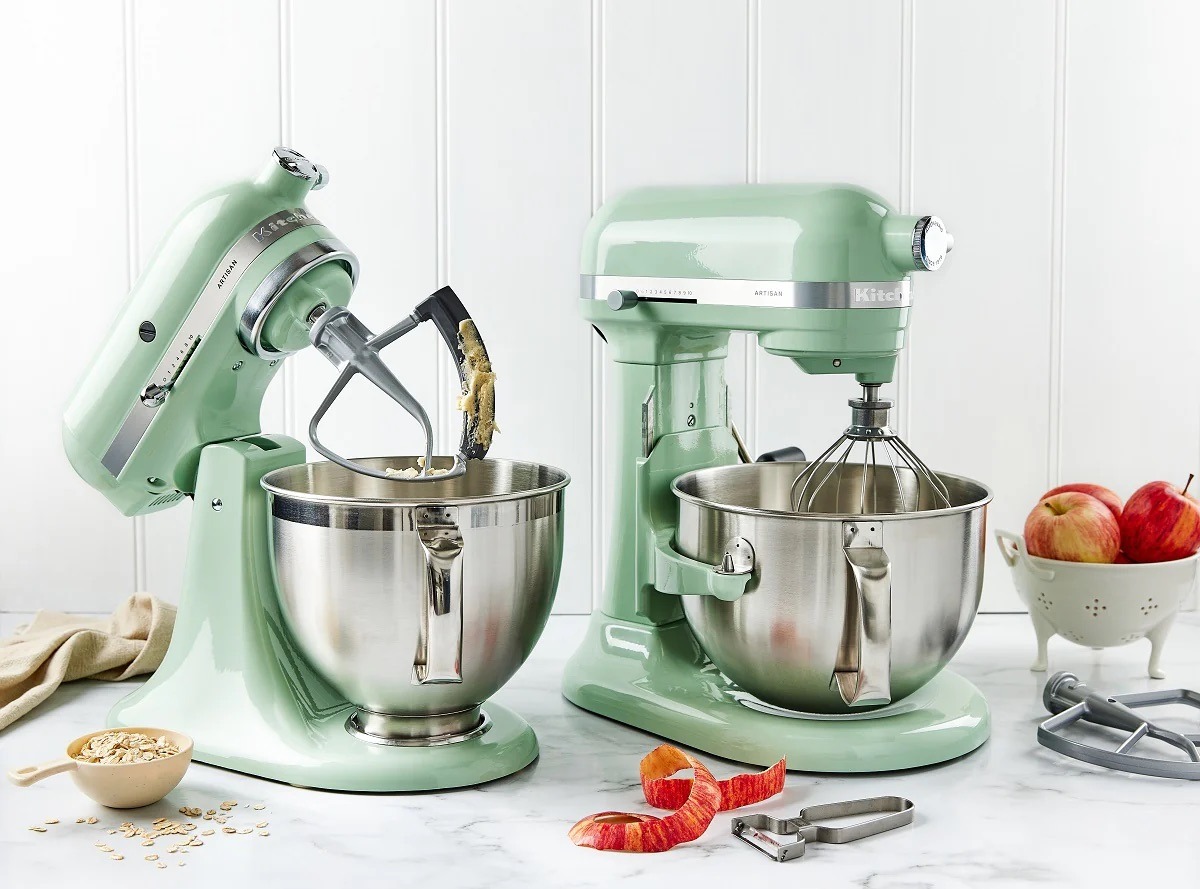
By 1914, Hobart unveiled its first industrial mixer, an impressive 80-quart H model, which quickly became indispensable in commercial bakeries and even found its place on U.S. Navy ships. The company’s vision soon expanded beyond industrial use, leading to the formation of the KitchenAid division in 1919. Their first consumer-oriented model, the 10-quart C-10, brought professional-grade mixing power into homes and smaller establishments. As time progressed, KitchenAid evolved into a household name, eventually being sold to Whirlpool Corporation in 1986, allowing Hobart to sharpen its focus on its core commercial equipment line. In 1999, Hobart itself became a proud member of the Illinois Tool Works (ITW) Group, continuing its legacy of robust, high-quality machines designed for the most demanding culinary tasks. This rich history underscores Hobart’s commitment to building mixers that are not just appliances, but long-term investments.
Unpacking the Hobart Stand Mixer: Beyond the Basics
When we talk about Hobart stand mixers, we’re discussing a breed apart. These machines are engineered for endurance and heavy-duty performance, distinguishing them from most residential models.
Types and Capacities
Hobart primarily specializes in planetary mixers, which are the cornerstone of commercial food preparation. While their product line includes massive floor models capable of mixing hundreds of pounds of dough, the Hobart N50 stand mixer is the smallest and most recognized model for those seeking commercial power in a countertop footprint. With a 5-quart capacity, the N50 bridges the gap between industrial might and a size that’s manageable for a very serious home baker or a small-scale artisanal business. Larger commercial units, ranging from 12 to 140 quarts, cater to the needs of institutional kitchens, large bakeries, and food manufacturing facilities.
Essential Attachments and Accessories
A Hobart mixer’s versatility is amplified by its robust attachments, designed to tackle a wide array of tasks:
- Flat Beater: Ideal for general mixing, creaming batters, and combining ingredients for cakes, cookies, and frostings.
- Wire Whip: Perfect for aerating ingredients like egg whites, cream, and light batters, creating voluminous and fluffy results. Hobart’s whisks are often noted for their precision, coming close to the bowl without scraping.
- Dough Hook: Essential for kneading heavy doughs for breads, pizzas, and bagels. While some standard C-shaped hooks are provided, many dedicated bakers often opt for spiral dough hooks, especially for larger or tougher doughs, to achieve superior gluten development and consistent results.
- Other Accessories: For larger commercial models, you’ll find specialized accessories like bowl scrapers to ensure thorough mixing, splash guards to prevent messes, and even bowl trucks or dollies for easy transportation of heavy mixing bowls.
Industrial Design and Uncompromising Build Quality
One look at a Hobart stand mixer, particularly the N50, tells a story of purpose-built engineering. Unlike the often colorful and sleek aesthetics of consumer-grade mixers, Hobart embraces an industrial design. It’s not about being “pretty” in the traditional sense; it’s about being functional, rugged, and exceptionally robust. These mixers feature an all-metal construction, often weighing upwards of 50 pounds for the N50. This substantial weight isn’t a drawback but a testament to its stability and resilience, meaning it won’t “walk” across your counter even when tackling the densest doughs. Its build quality suggests a permanent fixture in your kitchen, a true investment rather than a temporary gadget.
The Engineering Marvel: Features and Technology of Hobart Mixers
What truly sets a Hobart stand mixer apart from its peers lies beneath its sturdy exterior—in its meticulously engineered motor and transmission system. This is where the magic of commercial-grade performance truly happens.
Gear-Driven Power: The Heart of the Hobart
A critical differentiator for Hobart mixers is their gear-driven transmission. Unlike many residential stand mixers that rely on belt drives, Hobart’s robust gear system ensures consistent and direct power transfer from the motor to the attachment. This means there’s no slippage, even under the heaviest loads, allowing the mixer to power through stiff doughs like sourdough or bagel dough without strain or risk of burning out the motor.
Unwavering Torque at Every Speed
Another significant advantage is Hobart’s ability to deliver its full horsepower at any speed setting. For instance, the N50’s 1/6 HP motor maintains its formidable torque whether you’re gently folding delicate ingredients on the lowest setting or powerfully kneading dough on the highest. This is a stark contrast to many consumer mixers, where maximum power is often only achieved at the highest speed settings, leaving them vulnerable to bogging down or motor strain when working with dense mixtures at lower speeds.
The Art of Planetary Mixing
All Hobart stand mixers employ a planetary mixing action. This mechanism involves the attachment rotating on its own axis while simultaneously revolving around the inside of the bowl, much like planets orbiting the sun. This dual motion ensures exceptionally thorough ingredient incorporation, eliminating unmixed pockets and creating uniformly consistent batters and doughs.
Controlled Speed for Precision
Hobart mixers typically feature a straightforward three-speed system: low, medium, and high. While this might seem limited compared to the 10+ speeds found on some residential mixers, these settings are precisely calibrated for optimal results across various tasks. It’s important to note that on many Hobart models, you often need to stop the mixer before changing speeds, a minor procedural difference that ensures the longevity of its robust gearing system. For professional bakers, this deliberate control is a feature, not a limitation, allowing for precise execution of recipes.
Quiet Operation, Powerful Results
Despite their industrial strength, Hobart mixers are often praised for their relatively quiet operation. Many users describe the sound as a “purr” or a “hum,” a far cry from the high-pitched whine or straining noises sometimes associated with less powerful machines working under load. This low-noise profile contributes to a more pleasant baking environment, whether in a busy commercial kitchen or a serene home setting.
Hobart vs. The Competition: A Head-to-Head with KitchenAid
For many aspiring bakers, the question often arises: “How does a Hobart stand mixer compare to the venerable KitchenAid?” While both are respected brands, they cater to distinctly different needs and expectations.
- Power and Durability: This is where Hobart truly shines. It’s built like a tank, designed for continuous commercial use. Its gear-driven transmission ensures unwavering power, effortlessly handling heavy, stiff doughs that might challenge or even burn out the motors of many belt-driven KitchenAid models. A Hobart is an investment expected to last 20-30 years, if not longer, with proper care.
- Noise Level: Surprisingly, many users report the Hobart N50 to be quieter than powerful KitchenAid models, particularly when tackling heavy loads. The robust engineering translates to less strain and, consequently, less noise.
- Speed Control: KitchenAid offers a wide range of speeds (often 10 or more), providing fine-tuned control and the convenience of changing speeds on the fly. Hobart, with its typical 3 fixed speeds and the need to pause for speed changes, offers a more deliberate, commercial-style operation focused on consistent torque.
- Bowl and Attachments: Hobart bowls are often lauded for their superior metal quality and secure locking mechanisms, which prevent movement during intense mixing. While both brands offer standard attachments, some Hobart enthusiasts might opt for third-party spiral dough hooks to further enhance performance with very heavy doughs.
- Aesthetics: If you’re looking for a statement piece with a vibrant color palette, KitchenAid typically offers more residential appeal. Hobart’s design is unapologetically industrial and functional. It’s a machine built for work, not for show, though its robust appearance carries its own kind of gravitas.
- Price and Investment: Here’s the most significant difference for home bakers. A Hobart N50 stand mixer can cost several thousand dollars new, making it a substantial investment compared to even the highest-end KitchenAid residential or commercial models. This price reflects its commercial-grade construction and longevity.
As professional baker Chef Anya Sharma once remarked, “Choosing between a Hobart and a KitchenAid isn’t about one being ‘better’ overall; it’s about aligning the tool with the task. If you’re kneading 20 pounds of brioche dough daily, the Hobart is your tireless partner. For a diverse range of home baking, a high-quality KitchenAid might be sufficient, but the Hobart is truly in a league of its own for raw power and enduring reliability.”
Getting the Most Out of Your Hobart: Usage and Maintenance
Owning a Hobart stand mixer is akin to having a professional piece of equipment in your kitchen. To maximize its performance and ensure it lasts for generations, understanding proper usage and diligent maintenance is key.
Smart Usage for Optimal Results
- Master the Speeds: While Hobart offers fewer speeds, each is optimized. Use low for initial mixing and heavy doughs, medium for general batters, and high for whipping. Respect the need to stop the mixer when changing speeds to protect the gear mechanism.
- Proper Bowl and Attachment Seating: Always ensure the mixing bowl is securely locked into place and the appropriate attachment is correctly seated on the agitator shaft. The N50’s bowl retaining clips are a fantastic feature to leverage for stability.
- Don’t Overload, But Don’t Underestimate: While Hobart mixers are exceptionally powerful, it’s still wise to follow recommended capacities to prevent unnecessary strain, though they can handle significantly more than typical home mixers.
Essential Maintenance for Lifelong Performance
Regular maintenance is the bedrock of a Hobart mixer’s legendary longevity. Neglecting these simple steps can lead to common issues and reduced lifespan.
- Consistent Cleaning: After every use, thoroughly clean the bowl, attachments, and the mixer head. Wipe down the exterior to prevent ingredient buildup and maintain hygiene.
- Lubricate Planetary Seal: A common cause of squeaking noises is a dry planetary seal. Routinely apply a food-grade mineral oil to this seal to keep it pliable and prevent frictional sounds. This simple step can prevent more serious issues down the line.
- Check Agitator Clearance: Periodically, inspect whether the agitator (the attachment) is touching the bottom or sides of the bowl. If it is, this can cause damage. Refer to your user manual for instructions on how to adjust the stop screw, which typically involves unplugging the mixer, removing the apron, and making precise adjustments.
- Monitor for Leaks: If you notice grease or oil leaking from the planetary or attachment hub, it often indicates worn seals (e.g., the spacer o-ring or quad ring). Address these promptly by replacing the seals, as leaks can lead to internal damage and performance issues.
Common Issues and Troubleshooting
Even with their robust build, Hobart mixers can occasionally encounter problems. Here’s a quick guide to common issues and their troubleshooting steps:
- Mixer Won’t Start:
- Check if the power cord is securely plugged in and if the circuit breaker has tripped.
- Ensure the wire cage (if applicable) is fully closed and the mixing bowl is correctly positioned and locked.
- Some models have a reset switch; locate and press it.
- If a digital display shows an error code (ErXX) or messages like “b_in” or “b_up”, consult your manual or unplug and re-plug the mixer.
- Unusual Noises (Squeaking/Grinding):
- As mentioned, a dry planetary seal is a frequent culprit; lubricate with mineral oil.
- A loose planetary bolt can cause grinding. This is often a job for an authorized technician to tighten and re-align.
- Leaking Oil/Grease:
- Verify the mixer isn’t overloaded.
- Worn seals (planetary shaft o-ring, attachment hub quad ring) are often the cause; replacement is typically required.
- Agitator Touches the Bowl:
- Verify the bowl is correctly seated and locked.
- Adjust the agitator clearance as described above (unplug, adjust stop screw).
- Mixer Keeps Shutting Off or Has Inconsistent Speed:
- The mixer might be overloaded; reduce the batch size.
- Allow the motor to cool down if it feels hot.
- For persistent issues with motor performance or electrical problems, it’s best to contact a qualified service technician, as these often require specialized tools and expertise.
Is a Hobart Stand Mixer Right for You? Factors to Consider
Deciding to invest in a Hobart stand mixer is a significant decision, and it’s important to align its capabilities with your specific needs.
- Baking Volume and Frequency: If you’re a professional baker, run a home-based baking business, or are a passionate home baker who frequently prepares large batches of bread, pastries, or other challenging recipes, a Hobart mixer will be an invaluable asset. Its design is for daily, heavy-duty use.
- Budget: Be prepared for a substantial upfront investment. The premium price reflects its commercial-grade quality, durability, and the exceptional power it delivers. While a deterrent for some, it’s a long-term investment that often pays for itself through reliability and longevity.
- Space and Portability: Given its considerable weight and industrial aesthetic, a Hobart stand mixer is best suited for a dedicated, permanent spot on your countertop. It’s not a machine you’ll want to frequently move or store away.
- Types of Baking: If your primary focus involves kneading heavy, stiff doughs, creaming large quantities of butter and sugar, or whipping voluminous meringues, a Hobart will excel. Its robust motor and gear-driven system handle these tasks with effortless grace.
- Long-Term Value: A Hobart mixer isn’t just an appliance; it’s a legacy piece. Many units last for decades, often passed down through generations or continuing to serve in commercial kitchens for 20-30 years with proper maintenance.
Frequently Asked Questions
What makes a Hobart stand mixer different from a KitchenAid?
Hobart mixers are built to commercial specifications with gear-driven transmissions, delivering consistent power at all speeds, making them exceptionally durable and capable of handling heavy loads without strain. KitchenAid, while excellent for home use, often uses belt drives and delivers maximum power only at higher speeds, with a more consumer-friendly aesthetic.
Are Hobart mixers suitable for home use?
Yes, particularly the Hobart N50, which is a 5-quart commercial-grade mixer that many serious home bakers choose for its superior power, durability, and ability to handle demanding tasks that might overwhelm residential mixers. It’s a significant investment, but its longevity and performance are unmatched.
How many speeds does a Hobart N50 typically have?
The Hobart N50 usually features three fixed speeds (low, medium, and high). To change speeds, you often need to stop the mixer, adjust the dial, and then restart it, a deliberate process designed to protect the robust internal gearing.
Why is my Hobart mixer making a grinding noise?
Grinding noises often indicate a loose planetary bolt or a dry planetary seal. Lubricating the planetary seal with food-grade mineral oil can resolve squeaking. A persistent grinding sound, especially if accompanied by a drop in the planetary, usually requires professional attention to tighten bolts or inspect internal components.
How often should I lubricate my Hobart mixer?
The planetary seal should be lubricated routinely, especially if you notice any squeaking or if the mixer is used frequently. Consulting your specific model’s user manual for a recommended maintenance schedule is always advisable.
Can a Hobart mixer handle very stiff doughs like bagel dough?
Absolutely. Hobart stand mixers are renowned for their ability to effortlessly handle very stiff and heavy doughs, such as bagel dough or dense whole wheat breads. Their gear-driven transmission and constant power output are specifically designed for such challenging tasks.
What is the typical lifespan of a Hobart stand mixer?
With proper care and maintenance, a Hobart stand mixer can easily last 20 to 30 years or even longer. They are built for the rigorous demands of commercial kitchens, making them exceptionally durable for home use.
Conclusion
The Hobart stand mixer stands as a towering figure in the world of baking equipment—a testament to power, precision, and unwavering resilience. Far more than a simple appliance, it is a commercial-grade workhorse, an enduring investment for those who approach baking with seriousness and passion. From its rich history of innovation to its gear-driven heart and robust construction, every aspect of a Hobart mixer speaks to a commitment to quality that is truly in a league of its own. While the initial investment may be substantial, the decades of reliable, powerful performance it offers make it an indispensable cornerstone for any kitchen where excellence in baking is the ultimate goal. If you’re ready to embrace the pinnacle of mixing technology and transform your baking experience, the Hobart stand mixer awaits.