Stepping into the world of serious baking, whether for a bustling family, frequent gatherings, or even a small home-based business, often brings a pivotal realization: your standard stand mixer might just not cut it anymore. That’s precisely where the Large Stand Mixer becomes an indispensable ally. More than just an oversized appliance, a large stand mixer is a powerhouse engineered to tackle high-volume tasks and heavy-duty ingredients with remarkable ease and efficiency, transforming your baking from a chore into a seamless, creative process. It’s about empowering you to bake bigger, better, and with unparalleled confidence, cementing its place as the heart of a truly capable kitchen.
The Origin Story: A Glimpse into Stand Mixer History
The journey of the stand mixer, particularly its larger iterations, is a fascinating tale deeply intertwined with the evolution of modern culinary practices. It all began in 1908 when Herbert Johnson, an engineer at the Hobart Manufacturing Company, found his inspiration watching a baker laboriously mix bread dough by hand. His vision led to the invention of an electric standing mixer. By 1915, his impressive 80-quart mixer was standard equipment in commercial bakeries and even on U.S. Navy vessels, proving its worth in large-scale food preparation.
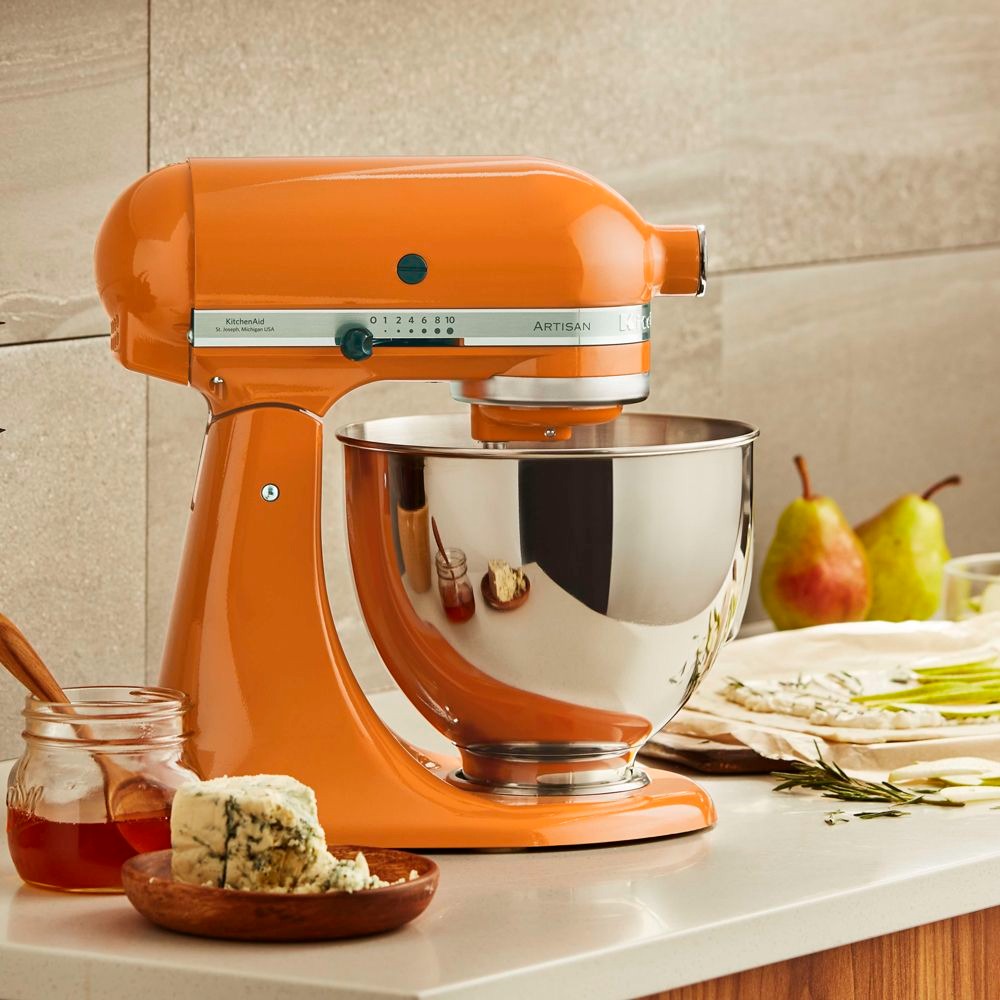
It wasn’t until 1919, after World War I, that Hobart introduced the KitchenAid Food Preparer, the first stand mixer designed for home use. This initial 5-quart model, however, was a hefty 65-pound machine and quite expensive for its time. The real breakthrough for home cooks arrived in 1936 when industrial designer Egmont Arens reimagined the mixer, making it significantly more compact and affordable. This redesign set the stage for the iconic silhouette we recognize today. The 1950s brought multiple speed settings, and by the 1970s, manufacturers began introducing a plethora of attachments, expanding the stand mixer’s capabilities far beyond simple mixing. This continuous evolution has led us to today’s modern large stand mixer, a testament to its enduring utility and a cornerstone for any serious baker.
Understanding Your Powerhouse: Types of Large Stand Mixers and Their Attachments
When considering a large stand mixer, you’ll encounter a couple of fundamental design choices that significantly impact its performance and suitability for different tasks.
Bowl-Lift vs. Tilt-Head
The primary distinction lies in how the mixing head operates.
- Tilt-Head mixers feature a hinged head that tilts back, allowing you to easily access the bowl and attachments. While convenient for smaller models (typically 5 quarts and below), larger tilt-head mixers can sometimes feel less stable and might wobble when handling very heavy doughs at higher speeds.
- Bowl-Lift mixers, on the other hand, have a stationary mixing head. The bowl is secured to arms and then cranked up into position, locking it underneath the attachments. This design provides superior stability and power, making it the preferred choice for large stand mixer models, especially those with capacities of 7 quarts and beyond, as they can confidently handle the most demanding mixing tasks without a hint of instability.
Planetary vs. Spiral Mixers
The way the mixing action occurs also differentiates mixers:
- Planetary mixers are the most common type for home and light commercial use. In these mixers, the attachment (beater, whisk, or dough hook) rotates around the stationary bowl while also spinning on its own axis, similar to planets orbiting the sun. This “planetary action” ensures thorough incorporation of ingredients. Most large stand mixer models for home bakers fall into this category, offering immense versatility.
- Spiral mixers are specialized machines, often found in professional bakeries, designed specifically for heavy doughs like pizza or artisan bread. Instead of the attachment moving, the bowl itself rotates while a spiral-shaped dough hook remains relatively stationary, efficiently kneading large quantities of stiff dough with minimal friction and heat build-up. While some compact spiral mixers exist for home use, the true large stand mixer in this category is a commercial workhorse.
Essential Attachments
A large stand mixer typically comes with a core set of attachments, though many offer a vast ecosystem of optional accessories:
- Dough Hook: Indispensable for kneading yeast doughs like bread, pizza, and pasta. Its shape mimics hand-kneading, developing gluten effectively.
- Flat Beater (Paddle): The go-to for mixing batters, creaming butter and sugar, making cookies, cakes, and even mashing potatoes. Many large stand mixers now include a flex-edge beater with a silicone scraping edge, which significantly reduces the need to stop and scrape down the bowl manually.
- Wire Whisk: Perfect for aerating ingredients, such as whipping egg whites into stiff peaks, making meringues, or creating fluffy whipped cream.
Beyond these, brands like KitchenAid offer an impressive array of additional attachments that can turn your large stand mixer into a meat grinder, pasta maker, spiralizer, or even an ice cream maker, making it a truly multi-functional kitchen appliance.
Unleashing Potential: Key Features and Technologies of a Large Stand Mixer
The true value of a large stand mixer lies in its robust design and the advanced technologies that enable it to outperform smaller counterparts.
Motor Power (Wattage/HP)
A powerful motor is the heart of any capable large stand mixer. While smaller mixers might suffice with 250-325 watts, large models often boast 500-650 watts or more for home use, and commercial-grade units can exceed 0.75 horsepower. This elevated power is crucial for several reasons:
- Heavy Doughs: It allows the mixer to handle dense, sticky doughs like sourdough, brioche, or multiple loaves of bread without straining, overheating, or slowing down.
- Durability: A powerful motor that isn’t constantly pushed to its limits will generally last longer, providing years of reliable service.
- Consistency: It maintains consistent speed and torque, ensuring ingredients are thoroughly mixed and developed to perfection, even under heavy loads.
Capacity
This is arguably the most defining characteristic of a large stand mixer. While a standard home mixer typically ranges from 4.5 to 5.5 quarts, a large stand mixer generally starts at 7 quarts and can go up to 8 quarts for home-commercial models, or even 10-20 liters for dedicated commercial units. This increased capacity allows you to:
- Bake in Bulk: Easily prepare double or triple batches of cookies, cakes, or frosting. Some 7-quart models can knead enough dough for 8 loaves of bread or mix ingredients for 13 dozen cookies in a single go.
- Handle Large Recipes: Tackle ambitious recipes that require significant volumes of ingredients, such as large wedding cakes or catering for events, without needing multiple mixing sessions.
Durability and Construction
A large stand mixer is built to last. Look for models with:
- Heavy-Duty Metal Construction: This ensures the appliance can withstand the stresses of intensive mixing without flexing or breaking.
- Stable Base: The weight of the mixer itself often contributes to its stability, preventing it from “walking” across the countertop during vigorous kneading. Bowl-lift designs often offer superior stability due to their fixed motor head.
Speed Settings
Most large stand mixers offer a range of 10-12 variable speeds, providing precise control over the mixing process. Features like “slow-start” technology are invaluable, preventing flour clouds or splattering when initially combining dry ingredients.
Smart Features (Optional)
Some modern large stand mixer models, like the GE Profile Smart Mixer, incorporate smart technologies. These can include:
- Integrated Scales: For precise ingredient measurement directly in the bowl, saving time and extra dishes.
- Built-in Timers: Allowing you to set specific mixing durations, after which the mixer may automatically shut off.
- App Control: While innovative, some users find these features less practical in daily use, as confirming selections on the physical machine is often still required.
“The key to a truly durable large stand mixer isn’t just raw power, but how that power is delivered. Look for robust gearing and a solid, heavy build – it’s what keeps your mixer humming smoothly through the toughest doughs for decades,” advises Michael ‘Mix-Master’ Davis, an Appliance Repair Specialist with 30 years of experience. This highlights that a well-engineered design is as crucial as high wattage.
Making the Most of It: Effective Usage and Maintenance for Your Large Stand Mixer
Owning a large stand mixer is a significant investment, and like any high-performance tool, proper usage and maintenance are key to maximizing its lifespan and ensuring optimal results.
Pre-use Checklist
Always begin by consulting your mixer’s owner’s manual. Ensure the mixing bowl is correctly locked into place and the chosen attachment (dough hook, beater, or whisk) is securely fastened.
Loading Ingredients
When adding ingredients, especially dry ones like flour, start slowly to prevent a messy cloud. Many large stand mixers come with a pouring shield, which is incredibly useful for this purpose, guiding ingredients directly into the bowl while keeping your countertop clean.
Speed Control
Resist the urge to jump straight to high speeds, particularly with heavy or dry mixtures. Start at the lowest speed to gently incorporate ingredients, then gradually increase to the desired setting. This protects your motor from unnecessary strain and prevents ingredients from splattering out of the bowl.
Batch Size
While a large stand mixer excels at big batches, be mindful of minimum quantities. Very small amounts of ingredients might not be adequately reached by the attachments in an extra-large bowl, leading to inconsistent mixing. If you frequently make small batches, consider if your large mixer has attachments designed for smaller quantities or if a dual-bowl system is offered. Conversely, never overload your mixer beyond its stated capacity, as this is a common cause of motor strain and premature wear.
Cleaning Protocol
Most bowls and attachments (flat beaters, dough hooks) made of stainless steel or coated materials are dishwasher-safe, typically on the top rack. Wire whisks, however, often require handwashing to prevent damage or discoloration. Always wipe down the mixer’s base with a damp cloth to remove any splatters or dust, ensuring no crumbs or residue accumulate in crevices.
Longevity Tips
To ensure your large stand mixer serves you for decades, avoid overtaxing the motor. If you hear it struggling or feel it becoming unusually warm, reduce the speed or, for extremely thick mixtures, consider dividing your recipe into smaller batches. Allowing the mixer to cool down between prolonged mixing sessions can also extend its life. Should parts show wear over time, many brands offer readily available replacements, from beaters to bowls, which are far more cost-effective than replacing the entire machine.
Beyond Convenience: The Transformative Benefits of Owning a Large Stand Mixer
The advantages of a large stand mixer extend far beyond mere convenience. It’s a tool that fundamentally elevates your entire baking experience, opening doors to new culinary possibilities.
Time and Effort Saving
The most immediate benefit is the sheer reduction in manual labor. Imagine kneading heavy bread dough by hand for 10-15 minutes or endlessly creaming butter and sugar until your arm aches. A large stand mixer handles these laborious tasks effortlessly, freeing up your hands and allowing you to multitask – perhaps prepping other ingredients or simply enjoying a cup of coffee while it works its magic. This hands-free operation is a game-changer for busy home bakers and professionals alike.
Superior Results
The powerful motor and precise planetary mixing action of a large stand mixer deliver results that are often difficult, if not impossible, to achieve consistently by hand or with a less powerful mixer.
- Consistent Mixing: Ingredients are thoroughly combined, ensuring no pockets of unmixed flour or uneven distribution.
- Optimal Aeration: For light and fluffy cakes, meringues, and whipped cream, the stand mixer excels at incorporating air, creating perfect texture and volume.
- Flawless Dough Development: The steady, powerful kneading action develops gluten in bread doughs beautifully, leading to superior rise, texture, and crumb.
“As a pastry chef, the sheer capacity and unwavering power of a large stand mixer transforms my workflow,” says Chef Eleanor Vance, Head Pastry Chef at “The Gilded Whisk Bakery.” “It’s not just about speed; it’s about consistently achieving that perfect texture, batch after batch.”
Versatility Beyond Baking
While primarily known for baking, a large stand mixer with its robust motor and attachment hub is incredibly versatile. With optional accessories, it can:
- Shred Cooked Meats: Easily shred chicken or pork for tacos, sandwiches, or salads.
- Make Fresh Pasta: Produce homemade pasta sheets and noodles.
- Grind Meat: Prepare your own fresh ground meat for burgers or sausages.
- Stuff Sausages: For the ambitious home charcuterie maker.
Empowerment for Avid Bakers
For those who are truly passionate about baking, a large stand mixer is an empowering tool. It encourages experimentation with more complex recipes, allows for larger production runs for special occasions, and provides the confidence that your equipment can handle any challenge you throw at it.
Choosing Your Culinary Companion: Factors to Consider When Buying a Large Stand Mixer
Selecting the right large stand mixer is a decision that requires thoughtful consideration to ensure it meets your specific baking needs and kitchen setup.
Capacity Needs
Start by honestly assessing your baking volume. Do you frequently bake for a crowd? Do you make large batches of bread or cookies? If so, a 7-quart or 8-quart model will be suitable. Commercial users might even look at 10-quart or larger options. Remember, while a large mixer offers generous capacity, ensure it’s not too big for your average batch sizes, as some struggle with very small quantities.
Motor Power & Stability
For heavy-duty tasks like kneading stiff dough, prioritize a powerful motor (500 watts and above for home models) and a stable design. Bowl-lift mixers are often lauded for their superior stability under load. A heavier machine usually translates to less “walking” on the countertop during operation.
Design (Bowl-Lift vs. Tilt-Head)
Consider your counter space and workflow. Bowl-lift models are more stable and often fit better under upper cabinets since the head doesn’t tilt up. Tilt-head models offer easier access to the bowl and attachments but require vertical clearance.
Attachments & Versatility
Most large stand mixers come with the essential dough hook, flat beater, and wire whisk. If you envision using your mixer for tasks beyond traditional baking, check for a power hub that accommodates a wide range of optional attachments like meat grinders, pasta makers, or vegetable slicers. KitchenAid is particularly well-known for its extensive attachment ecosystem.
Footprint & Storage
Large stand mixers are, by their nature, sizable appliances. Measure your available countertop space and cabinet clearance. Many avid bakers keep their large stand mixer on the counter permanently due to its weight and frequent use. If storage is a concern, consider its dimensions carefully.
Budget
These powerful machines are an investment. Prices can vary significantly based on brand, capacity, and features. Determine your budget, but remember that a high-quality large stand mixer is designed to last for many years, making it a worthwhile long-term kitchen companion.
“Many home bakers shy away from larger mixers, fearing they’re overkill. But once you experience the stability and effortless kneading of a 7-quart model, you realize it’s an investment in both your time and the quality of your bakes,” explains Julian Chen, a renowned food blogger and artisan bread maker at “Doughnut Dreams.”
The Heavyweights: Top Large Stand Mixer Brands Compared
When it comes to large stand mixers, a few brands consistently rise to the top, each bringing its unique strengths to the table.
- KitchenAid: Undoubtedly the most iconic name, KitchenAid offers a range of large capacity mixers, with their 7-quart Bowl-Lift model often highlighted for its robust power, exceptional stability, and legendary durability. They are celebrated for their wide array of colors and the extensive ecosystem of optional attachments, making them incredibly versatile.
- Wolf Gourmet: Known for their premium kitchen appliances, Wolf Gourmet offers a 7-quart High-Performance Stand Mixer. Reviews often praise its quiet operation, infinitely variable speeds, and sturdy build, though some note its high price point and a design quirk where the bowl cannot be removed while attachments are in place.
- Ankarsrum: This Swedish-designed brand stands apart with its unique spinning bowl mechanism (a spiral mixer concept). The Ankarsrum Assistent Original, typically around 7 liters (approximately 7.4 quarts), is a favorite among serious bread bakers for its powerful kneading action and ability to handle large, heavy doughs with ease. It does, however, have a learning curve if you’re accustomed to planetary mixers.
- GE Profile Smart Mixer: A more recent contender in the large stand mixer arena, GE offers a 7-quart smart mixer that impresses with its stability, powerful motor (540 watts), and innovative features like an integrated scale. While the smart app features might not be for everyone, its core mixing performance for large batches is strong.
- Cuisinart: Cuisinart provides reliable stand mixers, including some larger capacity options (e.g., 5.5-quart and above). While offering good value, some models have been noted to struggle with very heavy doughs over prolonged periods, with motors becoming warm and noisy.
Each brand offers a slightly different philosophy and feature set, but all aim to provide the power and capacity needed for serious baking.
Pro Tips & Tricks for Your Large Stand Mixer
To truly master your large stand mixer and get the most out of it, consider these expert tips:
- Room Temperature is Your Friend (Mostly): While a powerful mixer can handle colder butter, for optimal creaming and emulsification in most recipes, using ingredients at room temperature will yield the best results and put less strain on your motor.
- Scraping is Still Key: Even with flex-edge beaters, occasionally stopping and scraping down the sides and bottom of the bowl with a spatula ensures all ingredients are fully incorporated, especially when making thick batters or sticky doughs.
- Utilize the Pouring Shield: This simple accessory is a lifesaver for adding dry ingredients like flour or powdered sugar without creating a cloud of dust, and for carefully drizzling in liquids like oil or melted butter.
- Listen to Your Mixer: Pay attention to any unusual noises, excessive vibrations, or if the motor feels overly hot. These are signs that your mixer might be working too hard, and you should consider reducing the batch size or resting the machine.
- Think Beyond Baking: Explore the full potential of your mixer’s attachments. From fresh pasta to homemade ice cream, the possibilities are vast once you get creative.
Troubleshooting Common Large Stand Mixer Issues
Even the most robust large stand mixer can encounter minor hiccups. Knowing how to troubleshoot common issues can save you frustration and potential repair costs.
Wobbling or Shaking
If your mixer starts to “walk” or shake excessively, especially at higher speeds:
- Check Batch Size: You might be overloading it with too much dough or batter.
- Speed Setting: You might be using too high a speed for a very heavy or stiff mixture. Reduce the speed.
- Even Load: Ensure ingredients are somewhat evenly distributed in the bowl.
- Mixer Weight: Lighter mixers are more prone to this. A truly heavy-duty large stand mixer is built to stay put.
Motor Overheating or Straining
If the motor feels hot to the touch or sounds strained:
- Overloading: This is the most common cause. Reduce the batch size.
- Mixture Consistency: Very thick doughs or stiff batters demand more power. Consider a slight increase in liquid or a smaller batch.
- Prolonged Use: Give your mixer a break. Let the motor cool down if you’re running it for an extended period, especially for heavy kneading.
Unmixed Ingredients at Bottom or Sides
If you find unmixed ingredients:
- Attachment Clearance: Your attachment might be set too high from the bottom of the bowl. Refer to your manual for adjustment instructions (if applicable).
- Insufficient Scraping: Even the best mixers benefit from occasional manual scraping.
- Small Batches in Large Bowls: For very small quantities, the attachment might not effectively reach the ingredients.
Dough Climbing the Hook
This is common with many bread doughs. Simply stop the mixer, use a spatula to push the dough back down, and restart. It usually happens less as the dough develops.
FAQs about Large Stand Mixers
What capacity defines a large stand mixer?
Generally, a large stand mixer refers to models with a bowl capacity of 7 quarts or more. Standard home mixers typically range from 4.5 to 6 quarts.
Is a higher wattage motor always better for a large stand mixer?
While higher wattage usually indicates more power, it’s not the only factor. The mixer’s build quality, gearing, and stability are equally important. A well-engineered 500-watt motor in a heavy-duty frame can outperform a higher-wattage motor in a less stable machine, especially for tasks like kneading heavy dough.
Can I make small batches in a large stand mixer?
Yes, but it can sometimes be less efficient. In very large bowls, small quantities of ingredients might not be picked up effectively by the attachments. Some models offer smaller secondary bowls or specialized attachments for this purpose.
What’s the main difference between a bowl-lift and a tilt-head large stand mixer?
A large stand mixer with a bowl-lift design has a stationary head and the bowl is raised and lowered. This offers superior stability for heavy loads and often fits better under cabinets. A tilt-head mixer’s head tilts back for bowl access, common in smaller models, but can be less stable with very large capacities and heavy doughs.
How long can I expect my large stand mixer to last?
With proper care and maintenance, a high-quality large stand mixer can easily last for 10-20 years or even longer. Key factors include not overloading the motor and replacing worn attachments when needed.
Are large stand mixers really worth the investment for a home baker?
For avid home bakers, those who bake frequently, entertain often, or tackle ambitious recipes, a large stand mixer is absolutely worth the investment. It saves significant time and effort, delivers consistently superior results, and expands your culinary capabilities.
Conclusion
The large stand mixer is more than just a kitchen appliance; it’s an investment in your culinary passion and efficiency. From its humble origins in commercial kitchens to becoming the indispensable centerpiece for serious home bakers, its evolution reflects a continuous quest for power, capacity, and reliability. By understanding its capabilities, features, and how to properly care for it, you unlock a world of possibilities in your kitchen. This powerful machine empowers you to effortlessly whip up towering cakes, knead perfect artisan breads, and prepare large batches of your favorite treats, transforming even the most challenging recipes into a joyous, creative experience. So, embrace the power and potential of a large stand mixer, and watch your baking aspirations rise to new heights.